
-
By Aurelie Correy
-
15 April 2026
- 0 Comment
Foundry Chipping Tools: Reducing MSD Risk with Ergonomic Pneumatic Hammers
How ergonomic pneumatic hammers can help reduce MSD risk when chipping castings in foundries
Foundry work is physically demanding, and OSHA’s Solutions for the Prevention of Musculoskeletal Injuries in Foundries makes that clear. The report states that foundry workers have higher musculoskeletal disorder, or MSD, injury rates than workers in general industry and construction, and links foundry tasks to risk factors such as forceful exertion, repetitive motion, awkward posture and exposure to vibration. (OSHA)
That is highly relevant when chipping castings.
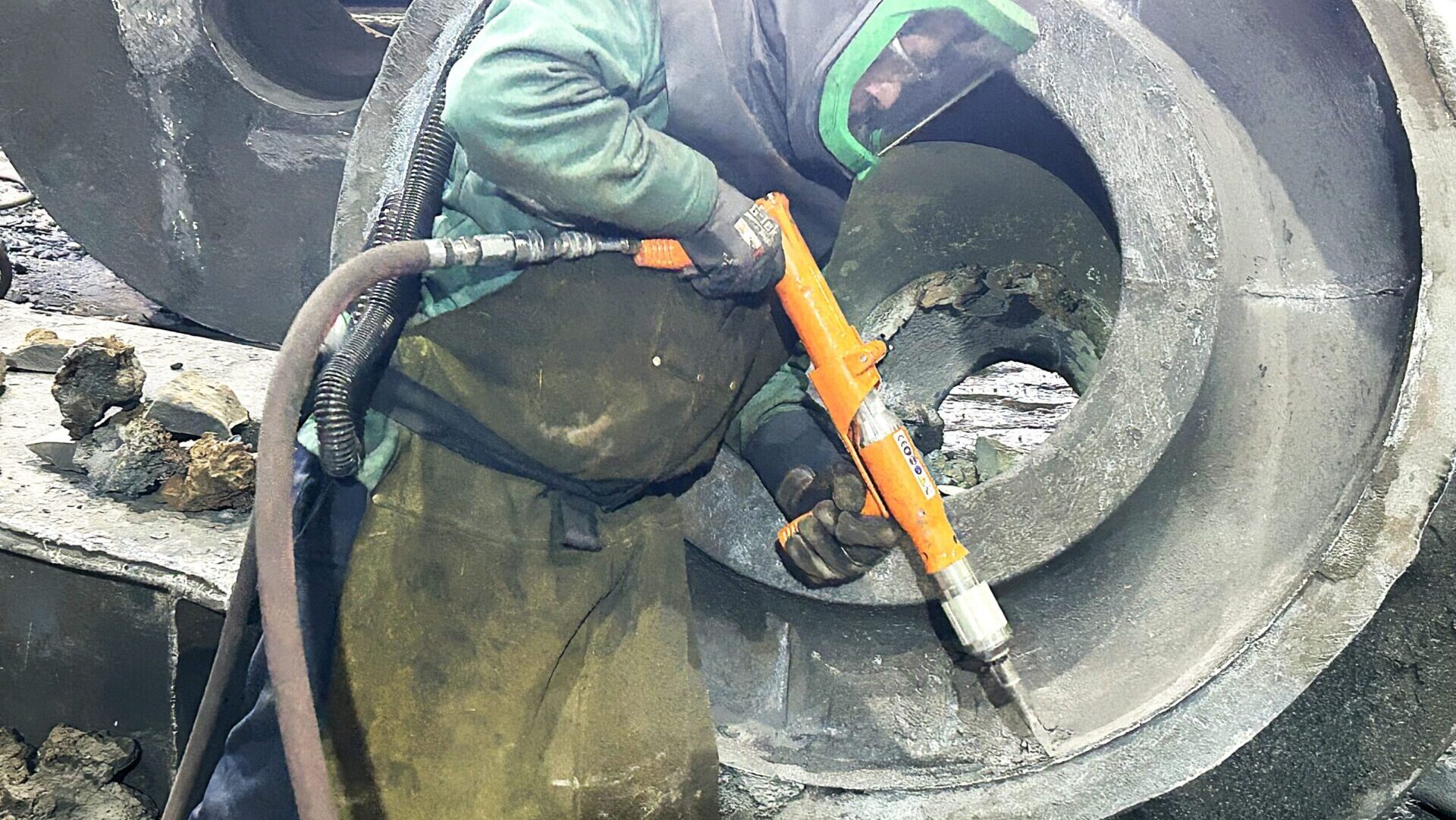
Removing flash, fins, adhered sand and other unwanted material from castings often means prolonged use of hand-held tools in awkward positions. Operators may be working around irregular shapes, inside difficult access areas, or at angles that place added stress on the wrist, elbow and shoulder. OSHA’s foundry guidance specifically points employers toward practical ergonomic improvements, such as using ergonomic pneumatic hammers, that reduce fatigue, improve control and lower the physical burden of the task. (OSHA)
What OSHA says about hand tools in foundries
OSHA’s report specifically points to pneumatic tools with task-enhancing features such as vibration-dampening properties and lighter weight. The guidance notes that lighter tools can help reduce effort and fatigue, reduce awkward hand, wrist, elbow and shoulder postures, improve control, reduce exposure to vibration and improve access to different areas of the casting. (OSHA)
This is an important point for foundries and distributors alike. When a chipping task cannot be eliminated, tool choice becomes part of the ergonomics discussion, not just the productivity discussion. OSHA’s broader aim is to increase awareness of ergonomic risk factors, alleviate muscle fatigue, increase productivity and reduce the number and severity of work-related MSDs. (OSHA)
How MABI ergonomic tools support foundry chipping applications
MABI’s lightweight ergonomic pneumatic hammers such as the S38 V2 Short Pneumatic Scraper are designed around exactly the kind of issues OSHA highlights in foundry work.
Their low weight helps reduce the physical load on the operator during repetitive chipping tasks. Adjustable handles help promote better posture and wrist alignment when working around awkward casting shapes. The V2 Anti-Vibration system helps remove up to 60% of vibration, helping reduce the vibration exposure that OSHA identifies as an ergonomic concern in foundry environments. OSHA’s guidance supports the principle that lighter, vibration-dampening pneumatic tools can play a useful role in reducing operator strain. (OSHA)
Why this matters in practice
For foundries, the benefit is not just operator comfort. Better ergonomics can support improved control, more consistent handling, and reduced fatigue over the course of a shift. For distributor sales teams, that creates a stronger application-led conversation: not simply which tool removes material, but which tool helps do the job with less strain on the operator. OSHA’s own guidance supports that approach. (OSHA)
A practical message for foundries and distributors
Heavy, high-vibration tools are a known concern in physically demanding foundry tasks. OSHA recommends practical ergonomic solutions, including lighter-weight pneumatic tools with vibration-dampening features. That makes ergonomic tool selection a relevant part of any conversation around chipping castings by hand. (OSHA)
MABI tools fit that discussion well: lightweight, ergonomic, pneumatic, and built to help improve posture, control and vibration performance in tough foundry environments.